




Latest Update: Dec 19, 2025, 11:53:59 AM
Introduction
Choosing the right strategy to start an agricultural business is the first—and perhaps the most important—brick in your structure. If laid crooked, the wall of your profitability will be skewed indefinitely. When it comes to investing in the agricultural sector, investors and farmers find themselves at a major crossroads: sticking to traditional methods and open-field cultivation, or entering the modern, controlled world of greenhouse farming? The answer is no longer as simple as it once was, as factors like climate change, water crises, and market fluctuations have complicated the equations.
Many imagine a greenhouse to be merely a space covered with plastic or glass, but the reality goes far beyond a simple covering. Knowing exactly what the difference is between greenhouse cultivation and other methods, and understanding the risks and potentials of each, is the fine line between a thriving agricultural business and a loss-making experience. On the other hand, open-field cultivation or traditional farming has been the breadwinner for centuries and still has its staunch supporters. However, the main question on every economic actor's mind is: given the costs of energy and inputs, which type of cultivation is ultimately better and more profitable? In this comprehensive article from the Gol Afrouz specialized magazine, we aim to move beyond generalities and weigh these two methods through an analytical, technical, and data-driven lens.
The Clash of Production Philosophies: Risk Management or Risk Elimination?
At first glance, it might seem that farming is just farming—whether it’s under the blue sky or a polycarbonate roof. However, when we dive into the technical details, we realize the profound difference between greenhouse cultivation and other methods, and why these two approaches represent two different worlds. In Open Field Cultivation, the farmer is essentially practicing crisis management. You are interacting with nature; strong winds, sudden hail, day-and-night temperature fluctuations, and locust attacks are variables over which you have little control. Your farmland is part of nature's vast ecosystem and subject to its ruthless laws.
In contrast, a greenhouse is an isolated and smart ecosystem. Here, the farmer plays the role of the "creator" of conditions. Temperature, humidity, light intensity, and even Carbon Dioxide ($CO_2$) concentrations are under your command. This climate control allows you to harvest a product in the dead of winter that naturally only grows in the summer. Therefore, if you are looking for production stability and want to know which cultivation is better and more profitable, you should know that the greenhouse guarantees stable production by eliminating disruptive variables.
Evaluating Performance and Yield Efficiency per Hectare
To better understand the subject, let’s look at the numbers and data. Many newcomers to this field do not know exactly why experts insist on the density of greenhouse cultivation. The primary difference lies in the use of vertical space and the length of the harvest period.
In open fields, the harvest period is limited to the season (e.g., 2 to 3 months). However, in modern greenhouses, the harvest period can last up to 9 or 10 months a year. According to FAO reports and domestic research, a comparison of the performance of some strategic products is as follows:
-
Tomatoes: In open fields, good records range between 40 to 70 tons per hectare. However, in modern hydroponic greenhouses, this figure easily reaches 300 to 600 tons per hectare (a 10-fold increase).
-
Cucumbers: Open field yield is about 20 to 30 tons, whereas in a greenhouse, it ranges between 150 to 300 tons per hectare.
-
Strawberries: The yield difference for this product is also about 5 to 8 times in favor of the greenhouse.
This vast discrepancy is exactly the point that answers which cultivation is better and more profitable. Of course, reaching these figures requires high technical knowledge, where our experts at Gol Afrouz can assist you as consultants on this journey.
Water Resource Management: The Most Critical Difference in Iran's Climate
One cannot discuss agriculture in Iran without ignoring the water crisis. One of the most important aspects that defines the difference between greenhouse cultivation and other methods is physical water productivity. In traditional and flood irrigation, efficiency is sometimes below 35%. A large volume of water is wasted through surface evaporation, runoff, and deep infiltration. However, in greenhouses—especially closed-loop hydroponic systems—the drainage water is treated and returned to the cycle. This means water consumption is reduced by up to 90%!
Therefore, if you live in a water-scarce region and your concern is which cultivation is better and more profitable, the scale undoubtedly tips in favor of modern greenhouses. In fact, in a greenhouse, you are not just selling water; you are converting it into high-value export products through precision-drop delivery.
Product Quality and Export Potential: Where the Real Money Lies
Agricultural profit is not found just in tonnage, but in the selling price. Here, we must examine the difference from a marketability perspective. Open-field products usually have high waste levels due to dust, sunburn, and bird attacks, and their appearance is not perfectly uniform. These products are more suitable for local markets or processing industries (like tomato paste production). But the greenhouse story is different:
-
Cosmetic Look: Greenhouse products have clear skin, uniform size, and attractive coloring, which are prerequisites for entering export markets (Russia, Persian Gulf countries, and Europe).
-
Shelf Life: Due to the precise feeding of Calcium and Potassium in greenhouse systems, the fruit texture is firmer, and its shelf life in storage and during long-distance transport is significantly higher.
-
Pesticide Control: In modern greenhouses using biological control, pesticide residue is minimized, which is essential for obtaining export health certificates.
If your goal is dollar-denominated income and you are asking which cultivation is better and more profitable, the product that can cross borders (the greenhouse product) is the final winner.
Economic Analysis and Investment (CAPEX vs. OPEX)
Now we come to the exciting part of the story: money and financial analysis. To make a decision, you must understand the cost structure.
-
Initial Cost (CAPEX): The biggest obstacle for greenhouses is the heavy construction cost. The cost of the skeleton, covering, heating/cooling systems, cultivation beds, and automation is very high. In contrast, open-field cultivation can be started with a negligible cost (land preparation and seeds).
-
Operational Cost (OPEX): In a greenhouse, energy costs such as gas and electricity, as well as specialized labor costs, are high. However, in open fields, the cost of pesticides and fertilizers (due to leaching) and seasonal labor costs are significant.
You might ask, with these heavy initial costs, what is the exact difference that attracts investors to greenhouses? The difference is the Return on Investment (ROI). If managed professionally, a greenhouse usually returns the entire initial investment within 3 to 4 years and then enters a phase of pure profitability. In contrast, open-field cultivation has a low profit margin and takes many years to create significant wealth.
 Complete Guide to Tomato Greenhouse Construction: Soil vs. Hydroponic
 How to Build a Cucumber Greenhouse
 How to Build a Home Greenhouse from A to Z
 Cost of Building a 1,000 sqm Hydroponic Greenhouse
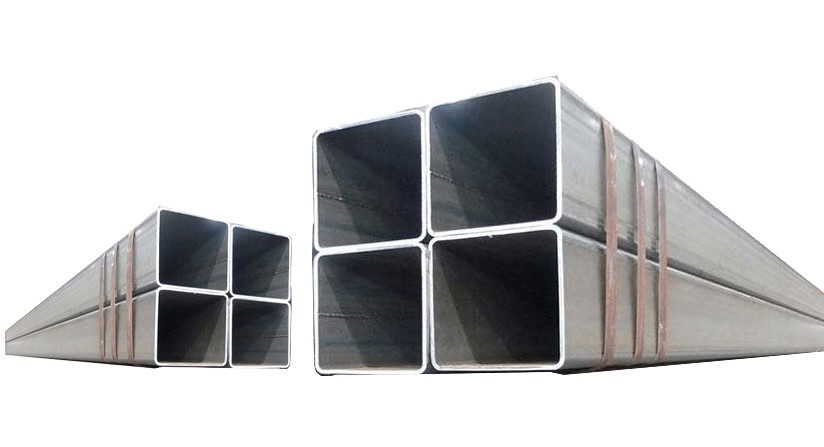 Galvanized can profile 10
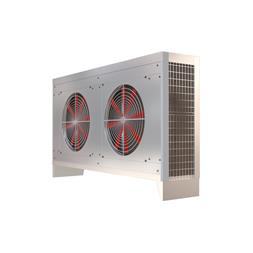 Axial Fan Evaporative Cooler
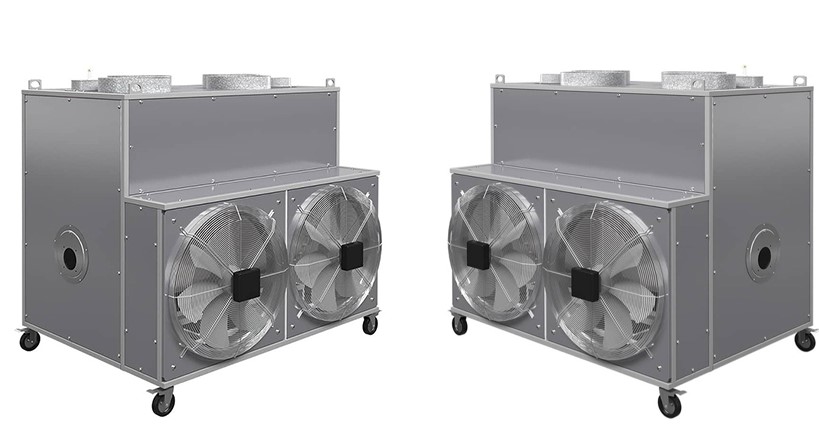 Furnace Heater
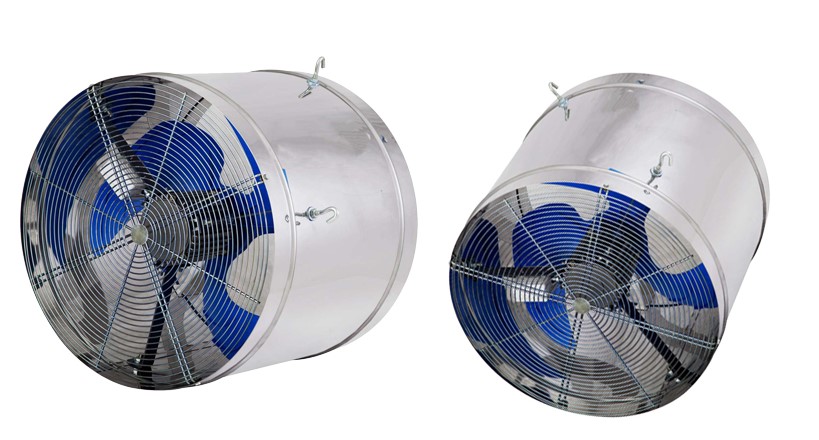 Type 4 Circulation Fan
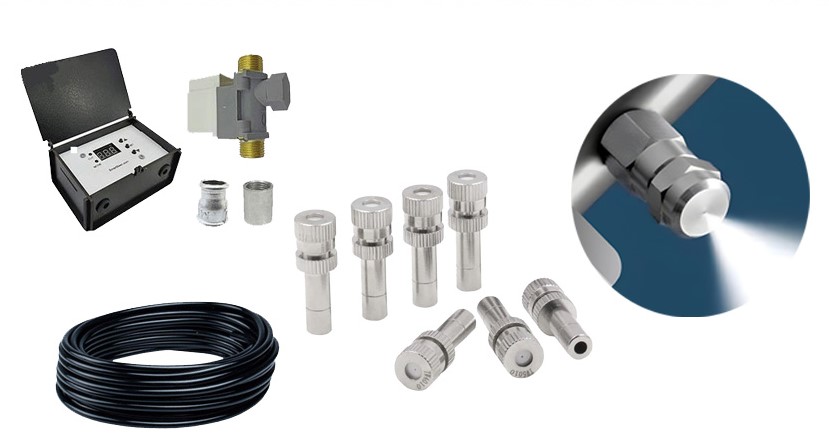 Greenhouse Mist Sprayer