




Latest Update: Jan 3, 2026, 11:24:23 AM

Introduction
When you decide to invest in the agricultural industry and build a greenhouse for yourself, it is as if you are constructing a "living" production factory. Just as the human skeleton plays a vital role in posture and function, the greenhouse skeleton is the guarantee of your capital's survival against the wrath of nature. One of the most frequent and perhaps most challenging questions that clients ask us in consulting sessions is regarding the choice of column material: What is the difference between a greenhouse with galvanized pipe columns and one with profile (box section) columns, and which one is better for my project?
The answer to this question is not a simple yes or no. The choice between a circular cross-section (pipe) and a square or rectangular cross-section (profile or box section) depends on several factors, such as regional climate, crop type, the load applied to the structure, and your budget. At Gol Afrouz, relying on the experience of implementing over 95 hectares of successful domestic and international projects annually, we aim to examine the differences between these two types of columns and determine which one is the best for your needs.
Why is the Choice of Column Type So Critical?
Imagine you have a greenhouse full of high-value products like vegetables or ornamental flowers. Suddenly, strong seasonal winds start, or a heavy snowfall settles on the roof. In these critical moments, all the applied pressure is transferred directly to the columns and arches of the structure. If your greenhouse structure is not designed based on precise engineering calculations, there is a risk of column buckling and the collapse of the entire structure.
Agricultural engineering organizations consider strict standards for structural resistance. Columns are essentially the main legs of the greenhouse that must bear "dead loads" (the weight of the structure and equipment itself) and "live loads" (wind, snow, and hanging crops). In greenhouse construction, the choice between pipe and profile is not just about aesthetics; it’s about physics, material strength, and ultimately, the security of your investment. At Gol Afrouz, we always emphasize that design must be based on the region's topography and climatic conditions to achieve maximum efficiency at the most optimized cost.
Technical Review: Greenhouse with Galvanized Pipe Columns
To better understand the difference between pipe and profile columns, we must first understand the nature of each. Pipe columns have been used in the traditional and even modern greenhouse industry for years. These columns have a circular cross-section and are usually produced from galvanized steel.
Technical and Aerodynamic Features of Pipes
One of the inherent characteristics of cylindrical objects is their aerodynamics. Wind passes easily around the pipe and has a lower Drag Coefficient compared to flat surfaces. At first glance, this seems like an advantage. In simple tunnel structures or greenhouses with narrow spans, the use of pipes is very common. Additionally, in the past, due to the greater availability of steel pipes, contractors were more inclined to use this material.
Connection Challenges in Pipe Columns
However, working with pipes has its own challenges. The main difference and difficulty lie in how the parts are connected. In the modern systems we implement at Gol Afrouz, all connections must be bolt-and-nut (portable) to ensure the structure's galvanization is not damaged. Attaching peripheral equipment or integrating arches to a round column requires specific and complex clamps. If these clamps lack the necessary quality, they will slip over time, jeopardizing the greenhouse structure's stability. It is not surprising to know that in many old greenhouses destroyed by storms, weak pipe connections were the primary cause.
When is a Pipe Suitable?
Does this mean pipes are bad? No. If your goal is affordable greenhouse construction in a region with mild winds and no heavy snowfall, and you plan for light soil-based cultivation, a structure with pipe columns might be an economical option. However, when it comes to large-scale industrial greenhouses, the equations change.
Technical Review: Greenhouse with Profile or Box Section Columns
Now we turn to the powerful competitor. Profiles (Box Sections) are hollow metal sections in a square or rectangular shape. In recent years, the use of profile columns in Spanish and Gothic structures has become extremely popular. But what is the reason for this widespread acceptance?
In the science of strength of materials, there is a concept called the Moment of Inertia, which indicates an object's resistance to bending. Imagine a plastic ruler; if you bend it from the flat side, it bends easily, but if you hold it by the edge, it is very difficult to bend. Profiles, due to their geometric shape, have a higher moment of inertia and radius of gyration compared to a pipe of the same weight.
This means that in the comparison between pipe and profile, profiles show much higher resistance against strong winds and the weight of snow or crops. This is why most structural engineers suggest using profiles for greenhouses with high heights (e.g., 6 meters and above) and wide spans.
Ease of Equipment Installation and Connections
A superb advantage of the profile is its flat surface. This flat surface allows the greenhouse construction contractor to implement bolt-and-nut connections with very high precision and strength. Installing gutters, column heads, and even peripheral equipment like roll-up motors or circulation fans on the flat surface of a profile is much safer and easier than on the slippery surface of a pipe. In a hydroponic greenhouse, where the volume of facilities and the applied load are high, this feature of the profile is worth its weight in gold.
Performance Comparison: Which One Wins?
By now, we have realized that both materials have their place, but let's have a head-to-head comparison:
1. Resistance to Heavy Loads
In the cultivation of cucumbers or tomatoes, the plants are hung from the roof. The weight of these plants at peak yield can reach 30 to 40 kg per square meter. If we add the weight of potential snow and heating facilities, the pressure on the column is immense. Engineering research shows that profile sections perform more stably in withstanding combined bending forces compared to pipes of the same weight. Therefore, for heavy and trellis-based cultivation, the profile is the more reliable option.
2. Connection Durability and Structural Vibration
A subtle point often ignored is vibration. Structures made entirely of pipes experience micro-vibrations under constant winds, which can loosen bolts over time. In a greenhouse structure with profile columns, due to the Face-to-Face contact in connections, the nodes are more rigid, and structural vibration is minimized.
3. Construction Cost Analysis
Interestingly, the profile is not always the most expensive option. While the price per kilogram of a profile might be slightly different, because of its higher strength, our design engineers at Gol Afrouz can sometimes increase the spacing between columns (e.g., from 2.5 meters to 3 or 4 meters). This reduces the total number of columns required, making the cost of building with profiles nearly equal to—or even more cost-effective than—building with pipes.
Hot-Dip Galvanization: Your Structure's Shield
The point that must be written in bold is: the choice between pipe and profile only matters if both are Hot-Dip Galvanized. Even the strongest steel profile will rot and collapse within a few years in a humid greenhouse environment if it lacks a proper anti-rust coating.
At Gol Afrouz, we are committed to ensuring all parts—whether pipe or profile—are made of steel with a Hot-Dip Galvanized coating. In this process, the iron is submerged in a molten zinc bath at approximately 450°C. This protective layer penetrates the inside and outside of the section, insuring the structure against rust for 20 to 30 years.
How to Choose the Best Option?
The final choice depends on balance—the balance between technical needs and financial budget. Our suggestion at Gol Afrouz is:
-
Know your climate: If you live in a windy area with speeds above 80 km/h, do not take risks; go for the profile.
-
Identify the crop: For products that need to be hung (cucumbers, tomatoes, peppers), the structure must have a high load-bearing capacity.
-
Think about the future: A profile structure adds more value to your property due to its modern look and is more attractive to buyers if you ever sell.
-
Get a consultation: Nothing replaces expert opinion. An experienced greenhouse contractor can simulate the structure using engineering software and suggest the most optimized state.
Conclusion
Between these two, there is no single "winner," but the right choice can significantly impact your success. Pipe columns are a classic and sometimes economical option for lighter structures, while profile columns are the symbol of strength and reliability for industrial and large-scale greenhouses.
If you are still hesitant about which structure is more suitable for your land and budget, or if you need an accurate estimate of greenhouse construction costs, contact the technical experts at Gol Afrouz right now. We are ready to design and implement the best solution tailored to your needs.
 Complete Guide to Tomato Greenhouse Construction: Soil vs. Hydroponic
 How to Build a Cucumber Greenhouse
 How to Build a Home Greenhouse from A to Z
 Cost of Building a 1,000 sqm Hydroponic Greenhouse
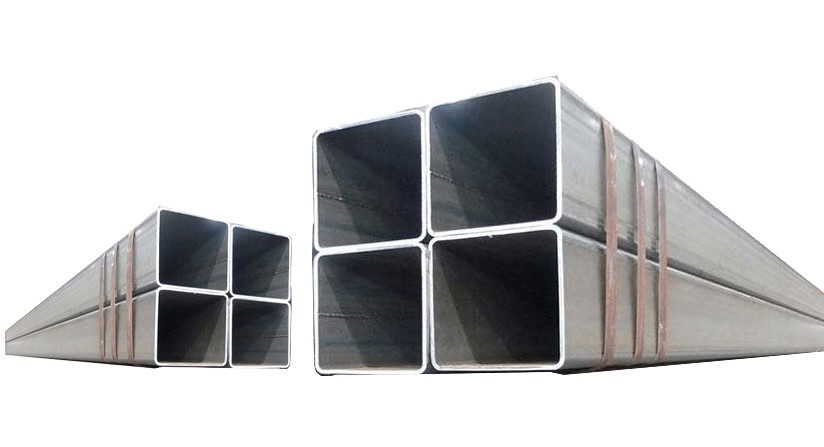 Galvanized can profile 10
 Axial Fan Evaporative Cooler
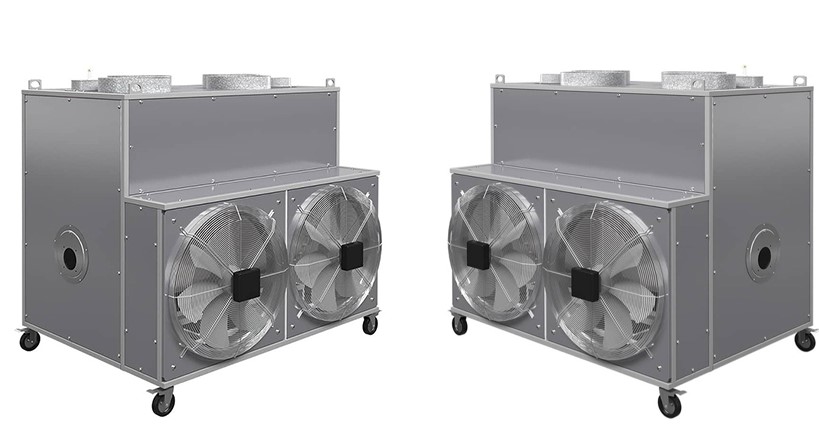 Furnace Heater
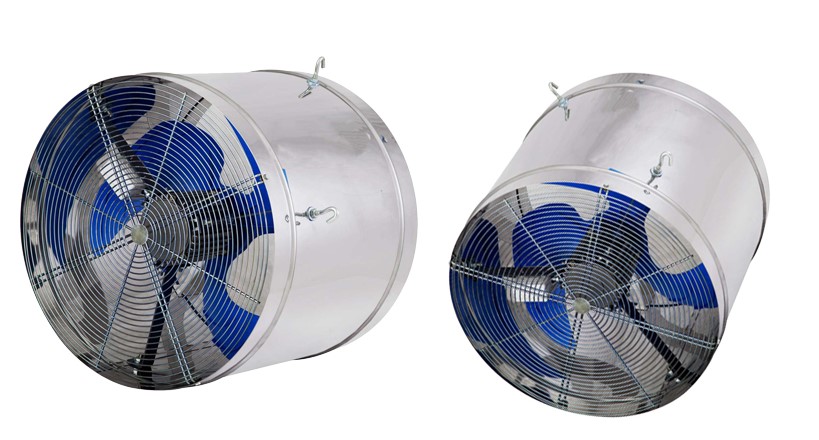 Type 4 Circulation Fan
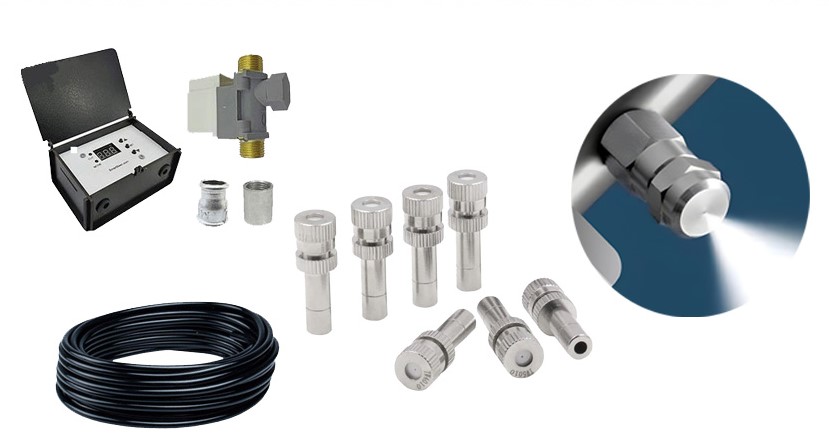 Greenhouse Mist Sprayer