




Latest Update: Dec 3, 2025, 8:03:56 AM

Introduction
Did you know that a temperature increase of just 2 degrees above a plant's tolerance limit can reduce your yield by up to 30%? In the greenhouse industry, the Cooling System is not an expense; it is an insurance policy that guarantees your final profit.
However, when it comes to making a choice, greenhouse owners face a major dilemma: The Pad & Fan System or the Fogging System. Various websites offer simple definitions, but here at Gol Afrooz, we want to resolve this issue for you once and for all with a strictly technical perspective based on our annual experience of implementing 95 hectares of greenhouses.
Understanding the Pad and Fan System
considered the classic type of evaporative cooling, this system is the most popular option in the Central Plateau of Iran. But what exactly happens in this system?
Mechanism of the Pad and Fan System
In this method, the greenhouse is transformed into a wind tunnel.
-
Inlet: Cellulose pads that are thoroughly soaked via a water distribution network.
-
Outlet: Powerful 140-size Exhaust Fans.
When the fans are turned on, they create negative pressure within the hall. The hot outside air is forced to pass through the wet pores of the pad. The water on the pad absorbs the air's heat to evaporate, resulting in cool and humid air entering the hall.
Why Cellulose Pads?
In modern Gol Afrooz projects, we exclusively use cellulose pads, not wood shavings (aspens). Why?
-
Durability and Longevity: Cellulose pads have a useful life of up to 5 years, whereas wood shavings must be replaced annually.
-
Greater Contact Surface: The regular geometric structure of the pads maximizes the air-water contact surface, increasing cooling efficiency.
-
Anti-Fungal and Anti-Bacterial: Our standard pads are saturated with special resins that prevent fungal growth and decomposition.
The 30 to 50 Meter Rule
A point competitors might not tell you! The Pad and Fan system has length limitations.
-
Ideal Distance: The distance between the pad and the fan should be between 30 and a maximum of 50 meters.
Why? Because as the cool air moves toward the fans, it gets warmer. If your hall length is 80 meters, plants at the beginning of the hall will freeze, while plants at the end will burn from the heat.
At Gol Afrooz Greenhouse Construction Company, if your land has a long length, we change the structure's orientation or the fan arrangement in the plan design so that you stay within the standard range and maintain uniform temperature.
The Fogging System
Many mistake foggers for sprinklers. You must understand that the difference lies in droplet size. A standard fogging system should not wet the plant; it should cool the air.
Microns Matter: The Working Mechanism
Gol Afrooz fogging systems operate at very high pressure (usually 70 bar and above).
-
Large Droplets (Above 50 Microns): Settle on the leaves, wet them, and cause fungal diseases (similar to low-pressure home systems).
-
Fine Droplets (Below 20 Microns): They "flash evaporate" in the air before reaching the ground or the plant. This means absorbing ambient heat without wetting the cultivation bed.
Vital System Components
-
High-Pressure Piston Pump: The beating heart of the system that supplies the necessary pressure.
-
Anti-Drip Nozzles: It is crucial that nozzles do not drip when the pump turns off (continuous dripping = destruction of the plant under the nozzle).
-
Multi-Stage Filtration: The most vital part to prevent nozzle clogging due to water impurities.
Temperature Reduction with Fogging
In addition to lowering the temperature, this system is used for Humidity Control. In cultivations like Dutch roses or seedling production, the presence of a fogger is almost mandatory.
Comparison Table
This is where you need to pick up the calculator. We have compiled this comparison based on the realities of the Iranian market and our project experiences:
| Evaluation Criteria | Pad and Fan System | Fogging System | Winner |
| Cooling Power in Dry Climates | Very High (up to 15°C reduction) | High (up to 10-12°C) | Pad & Fan |
| Temperature Uniformity | Poor (Has temperature gradient) | Excellent (Same everywhere) | Fogging |
| Water Consumption | High (Closed cycle & recyclable) | More optimized than Pad & Fan | Fogging |
| Sensitivity to Water Quality (TDS) | Medium (Some salinity tolerance) | Very Sensitive (Needs sweet/RO water) | Pad & Fan |
| Electricity Cost | High (Due to many fans) | Medium (Only pumps run) | Fogging |
| Plant Disease Risk | Low | High (If humidity is mismanaged) | Pad & Fan |
| Initial Setup Cost | Medium | Relatively High (Steel pipes & pumps) | Pad & Fan |
Guide to Selecting the Best Cooling System
Gol Afrooz consultants suggest the best option based on the "Golden Triangle" (Climate, Crop, Water). Let's examine in detail which system is more suitable for your conditions:
1. Best Greenhouse Cooling for Hot and Dry Regions
If your greenhouse is being built in provinces like Yazd, Isfahan, Kerman, Semnan, or Qom, the Pad and Fan System is the undisputed king. In these regions, relative humidity is usually below 30%. This means the cellulose pad can evaporate water with maximum efficiency, reducing the hall temperature by up to 15°C. Using foggers in these areas is recommended only as an auxiliary system, as the Pad and Fan alone can manage the intense summer heat.
2. The Challenge of Cooling in Humid and Sultry Regions
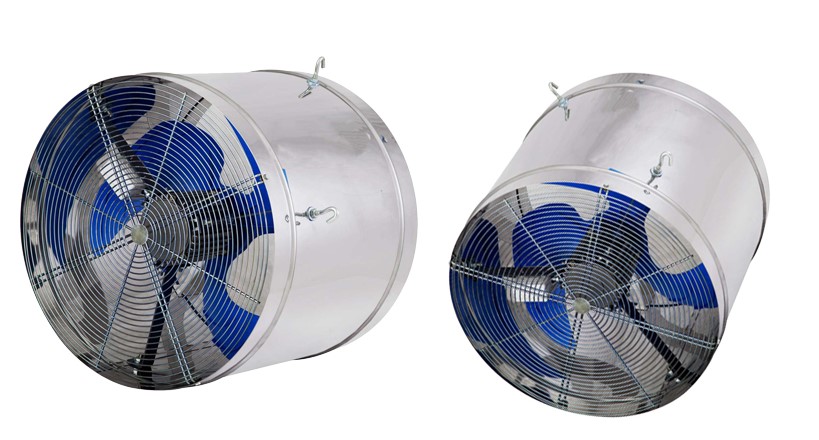
In northern Iran or southern coasts where humidity is above 70% or 80%, evaporative systems (both Pad & Fan and Fogging) lose their efficiency. When the air is saturated with moisture, no water evaporates to produce cold! In these climates, the Gol Afrooz strategy uses Jet Fans for air circulation, Shading Systems to reduce sunlight entry, and relies on natural roof ventilation. Installing Pad and Fan in the north of the country is usually a waste of capital.
3. Suitable System for Hydroponic and Modern Greenhouses
Your crop type is the deciding factor. If you are planting greenhouse cucumbers, which are sensitive to powdery mildew and fungal diseases, Pad and Fan is a safer option than fogging. However, if your product is Dutch roses or strawberries requiring precise humidification, a Fogging System is a necessity. For tomatoes, a smart combination of both systems (Pad & Fan for base cooling + Fogging for peak noon heat) offers the best performance.
Introducing the Best Greenhouse Cooling Equipment
At Gol Afrooz, we believe equipment quality guarantees the greenhouse's lifespan. That is why we use top market brands in our projects. Below, we introduce 5 of the best fogging systems components:
Top 5 Fogging System Components
For a fogger to work like clockwork, we suggest these parts:
-
Bertolini Piston Pumps (Italy): These pumps are the "Mercedes Benz" of the misting world. With a working pressure of 110 to 200 bar and ceramic pistons, they have a very long life and are resistant to continuous summer operation.
-
Interpump (Italy): Interpump pumps are known for their durability ("die-hard") and are an ideal option for large industrial greenhouses requiring high water volume.
-
Ceramic Anti-Drip Nozzles: Unlike old brass nozzles that widen over time, ceramic nozzles with diameters of 20 and 30 microns maintain their spray precision for years. their anti-drip feature prevents plant wetting and rotting.
-
High-Pressure Polyamide Hoses: Instead of heavy metal pipes, we use flexible polyamide hoses that withstand pressures up to 150 bar, making installation very fast and clean.
-
Orbit Pumps (Taiwan): For medium greenhouses or those with a more limited budget who still want quality, the Orbit brand, with US-licensed standards, is the best economic option.
 Complete Guide to Tomato Greenhouse Construction: Soil vs. Hydroponic
 How to Build a Cucumber Greenhouse
 How to Build a Home Greenhouse from A to Z
 Cost of Building a 1,000 sqm Hydroponic Greenhouse
 Galvanized can profile 10
 Axial Fan Evaporative Cooler
 Furnace Heater
 Type 4 Circulation Fan
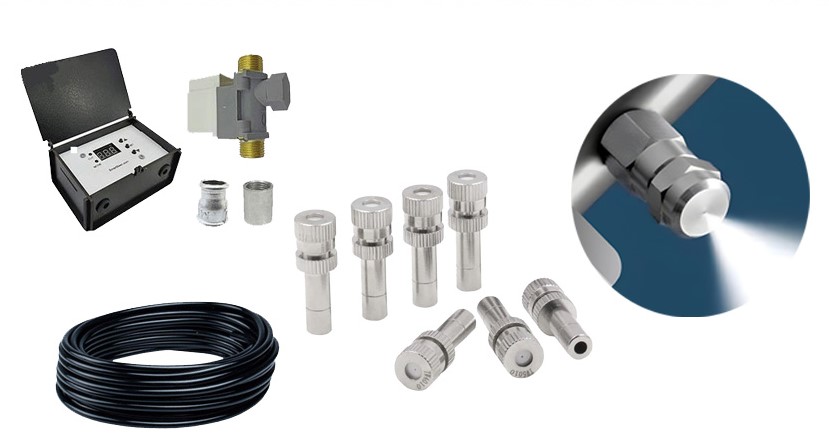 Greenhouse Mist Sprayer